Stones to Starships

Pre-alpha demo · in development

Stones to Starships

From Stones to Starships

A first-person survival and base-building game about harvesting a world, building the machines that do the work for you, and upgrading your way from hand tools to the space age.

See the loop

The Steam page is not live yet. This button will be enabled when it is.

The premise

Share your shield. Kick-start the machines.

Your personal shield generator recharges on its own, and you can pour that charge straight into a machine to kick-start it. Help your colony gather resources, get a burner running, and build out a power grid — and the machines gradually stop needing you standing next to them at all.

Then you stop doing it yourself. An Assembler. A burner that runs without you standing on it. A Robot Fabricator that prints machines with names, jobs and skill levels of their own. Every machine you raise is another thing you no longer have to hold a button for, and the game keeps handing you bigger levers.

Every upgrade is a rung. Your own shield charge to a biomass burner to solar to stored energy. Hand tools to power tools. One robot to a shift of them. The progression is deliberately incremental: each rung exists because the one before it ran out, and you can feel exactly which bottleneck you are buying your way past.

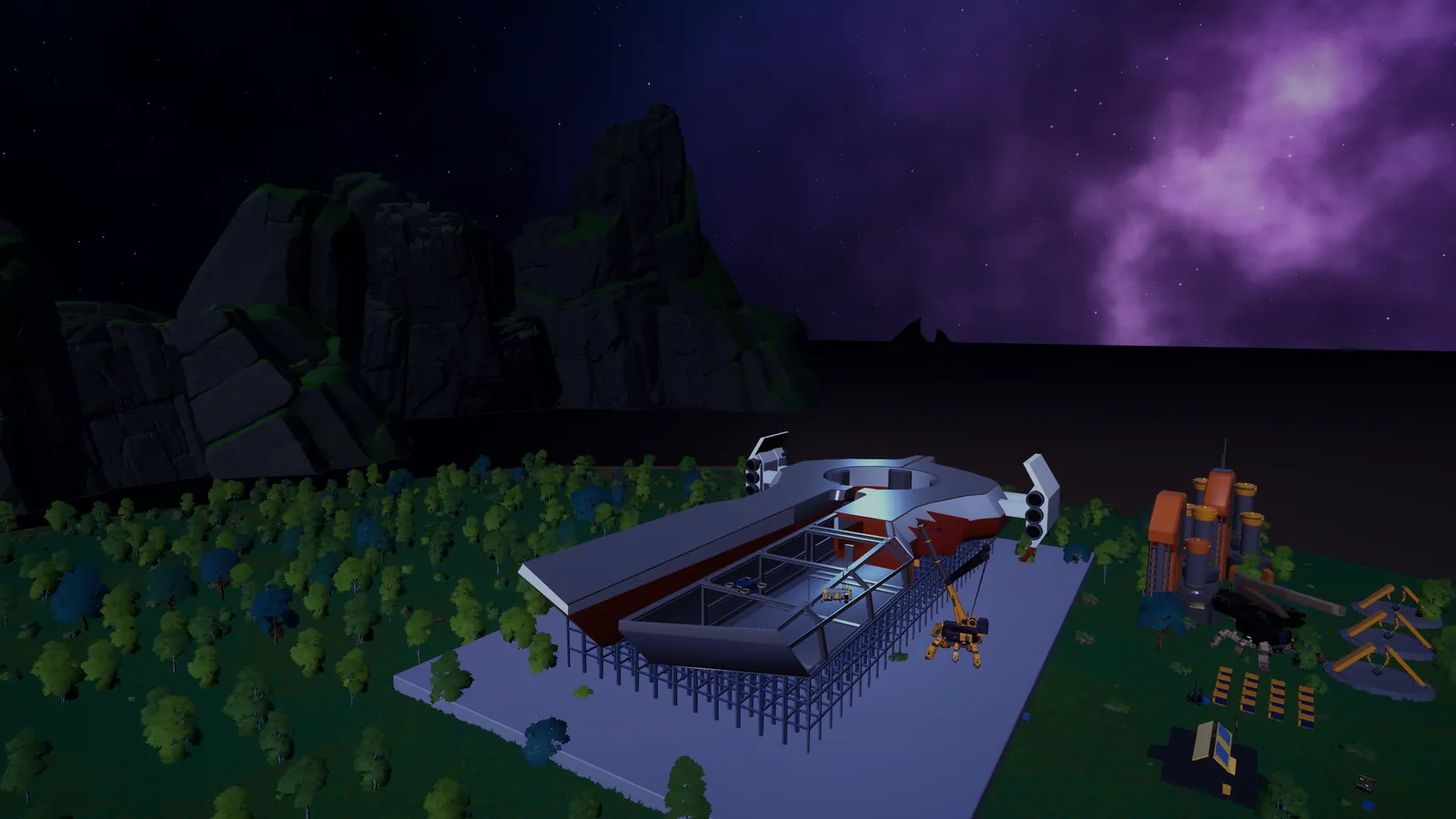
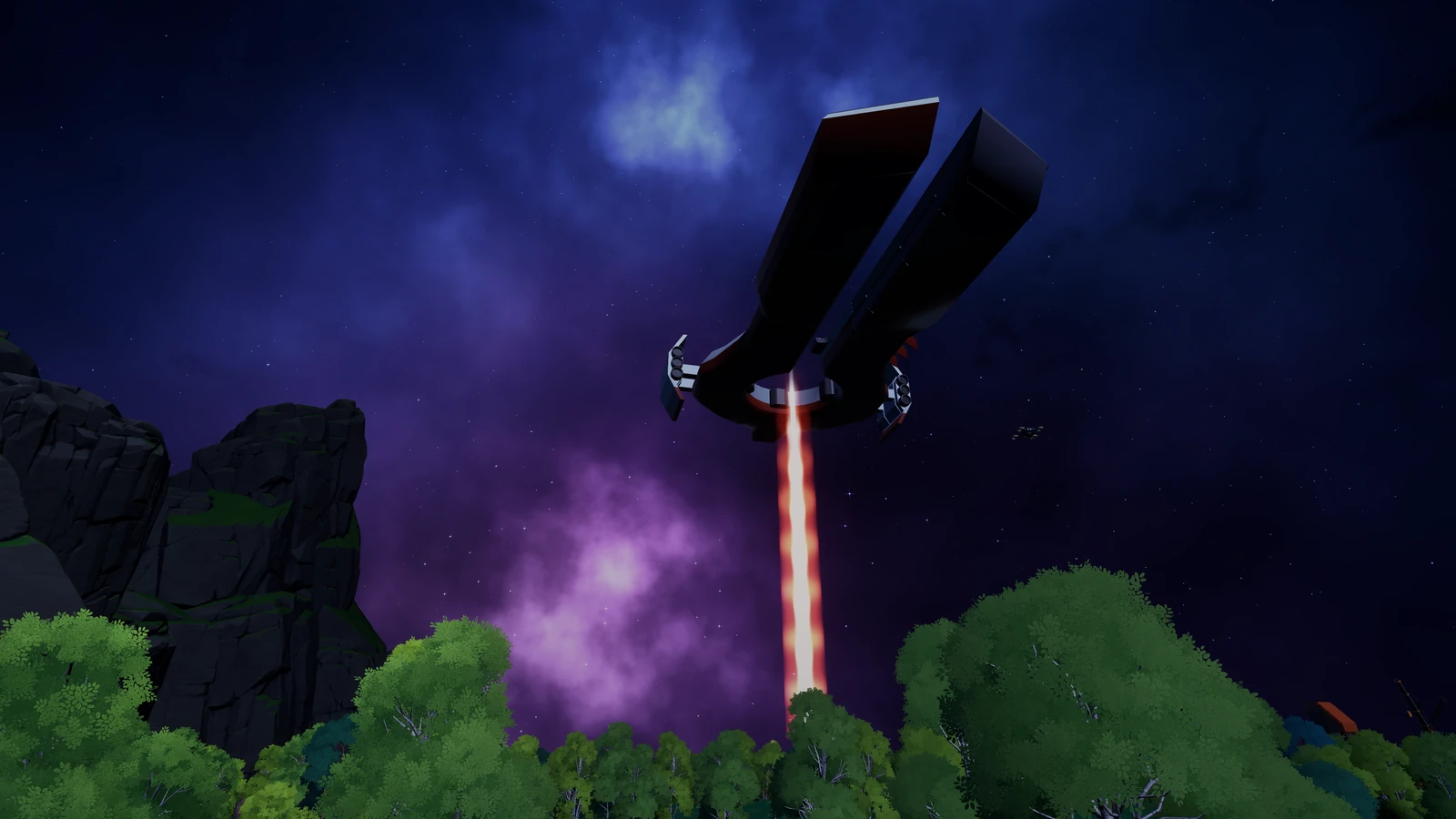
And it ends in the space age. That is what the title describes and it is meant literally — the climb runs from the first rock you break to a starship. The rungs between are the game.

What you do

Features

Harvest the island

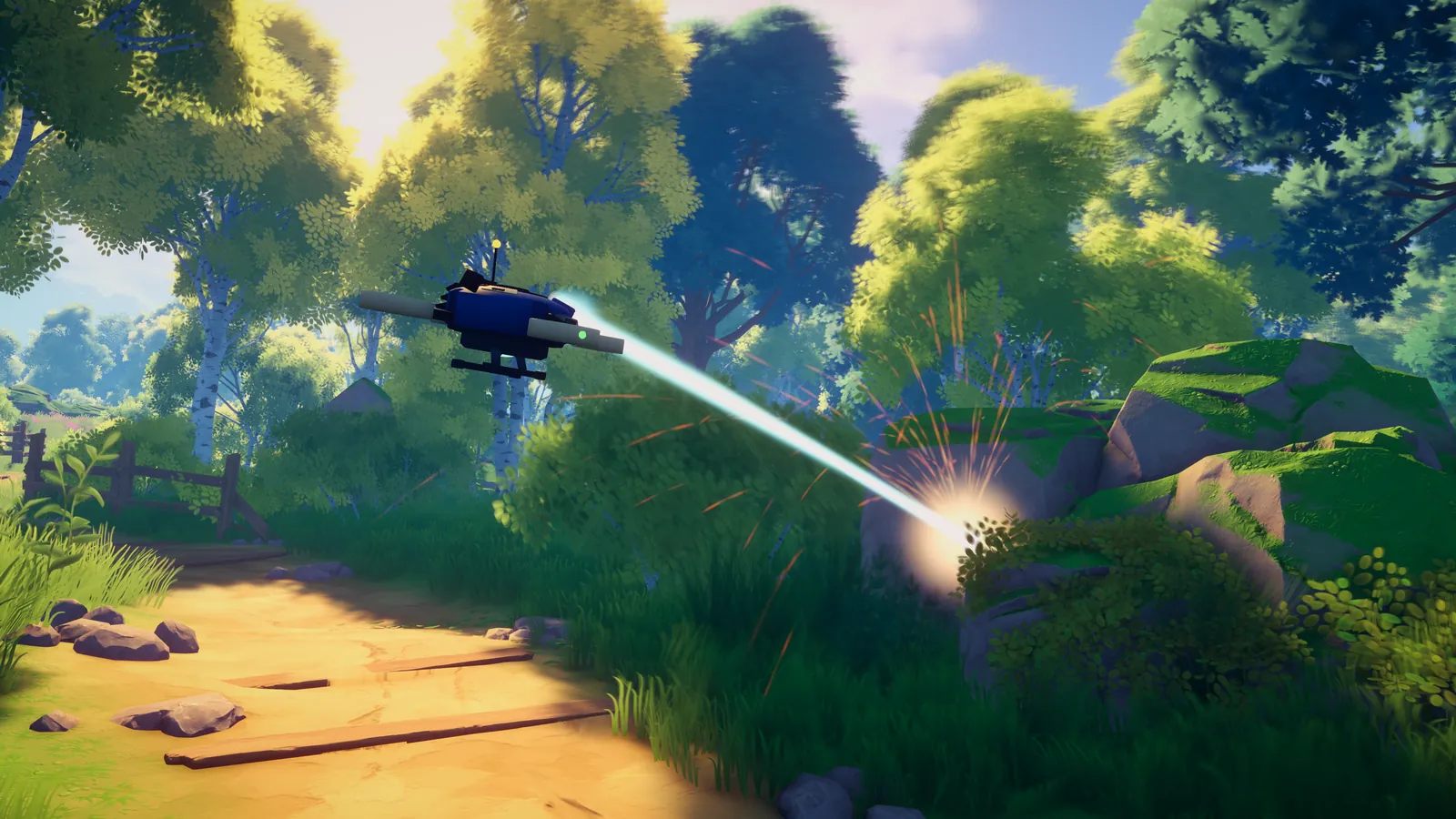
Everything starts physical. A harvest beam chips stone off outcrops, strips biomass off bushes, and takes wood off trees, and the resources arc straight into the Matter Lattice — the shared colony wallet every linked builder and fabricator draws from. The first pickup says it plainly: what you gather here can be used anywhere. No hauling crates back to base to make a recipe work.

Screenshot slot — gather_beam

Build the machines

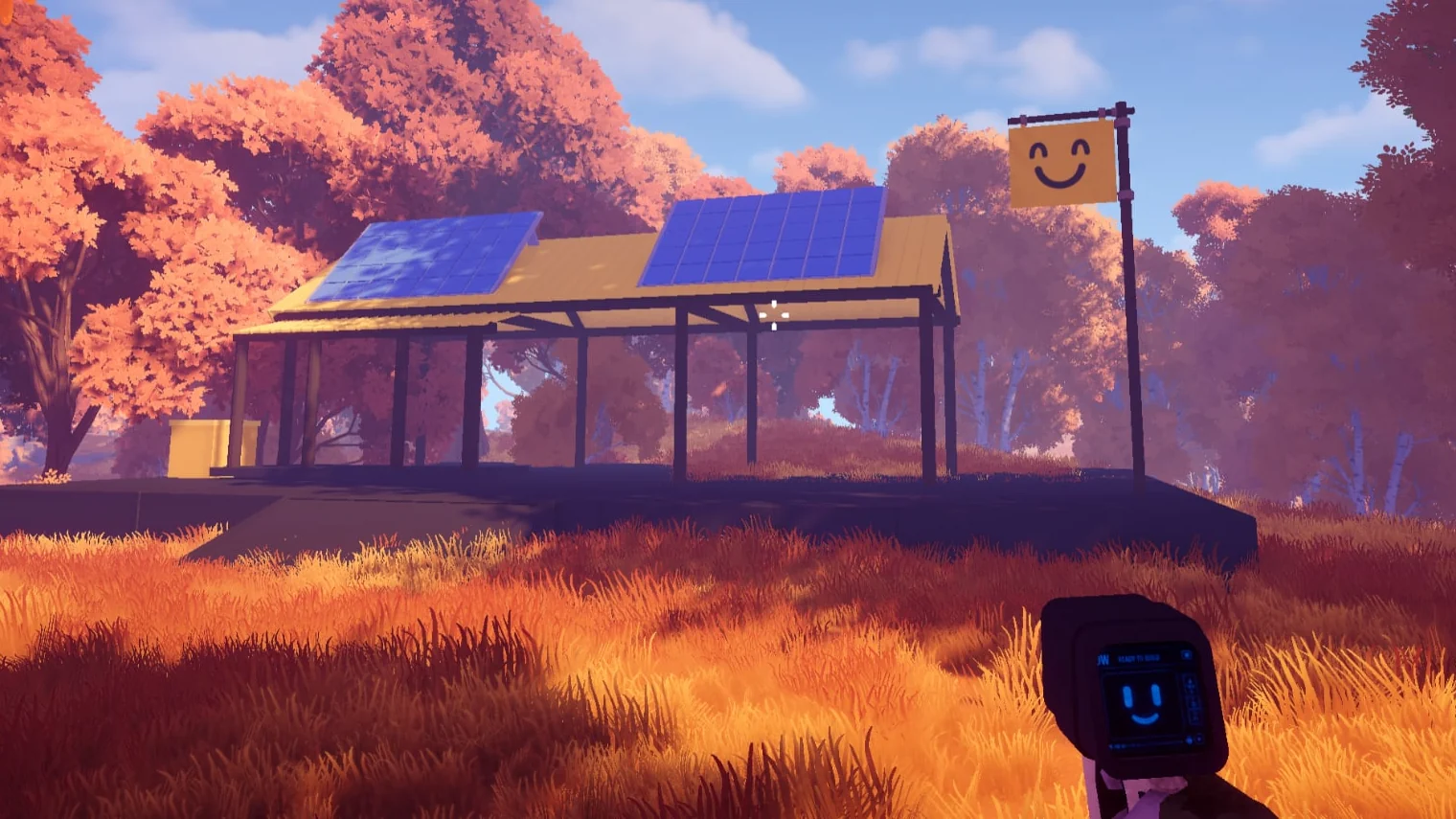
Then you stop doing it by hand. Raise a camp, an Assembler, a burner that runs without you standing on it, a Robot Fabricator that prints workers. Everything you place draws from the same colony wallet, so building is a decision about what to automate next rather than a scavenger hunt for the right crate. Each machine is one more button you never have to hold down again.

Tall cream and steel industrial towers rising above a treeline under a blue sky, with the ocean on the horizon.

Name your robots

The Robot Fabricator asks three questions and no more. Which unit type — Scout, Worker, or Heavy, each with its own trait and its own real numbers in hit points and metres per second. What goes in the two module bays. How far to push Frame, Servos and Tooling. Unit type is locked once built: a refit adapts a robot to a job, it never turns a Scout into a Heavy. Then you name it, and it is yours.

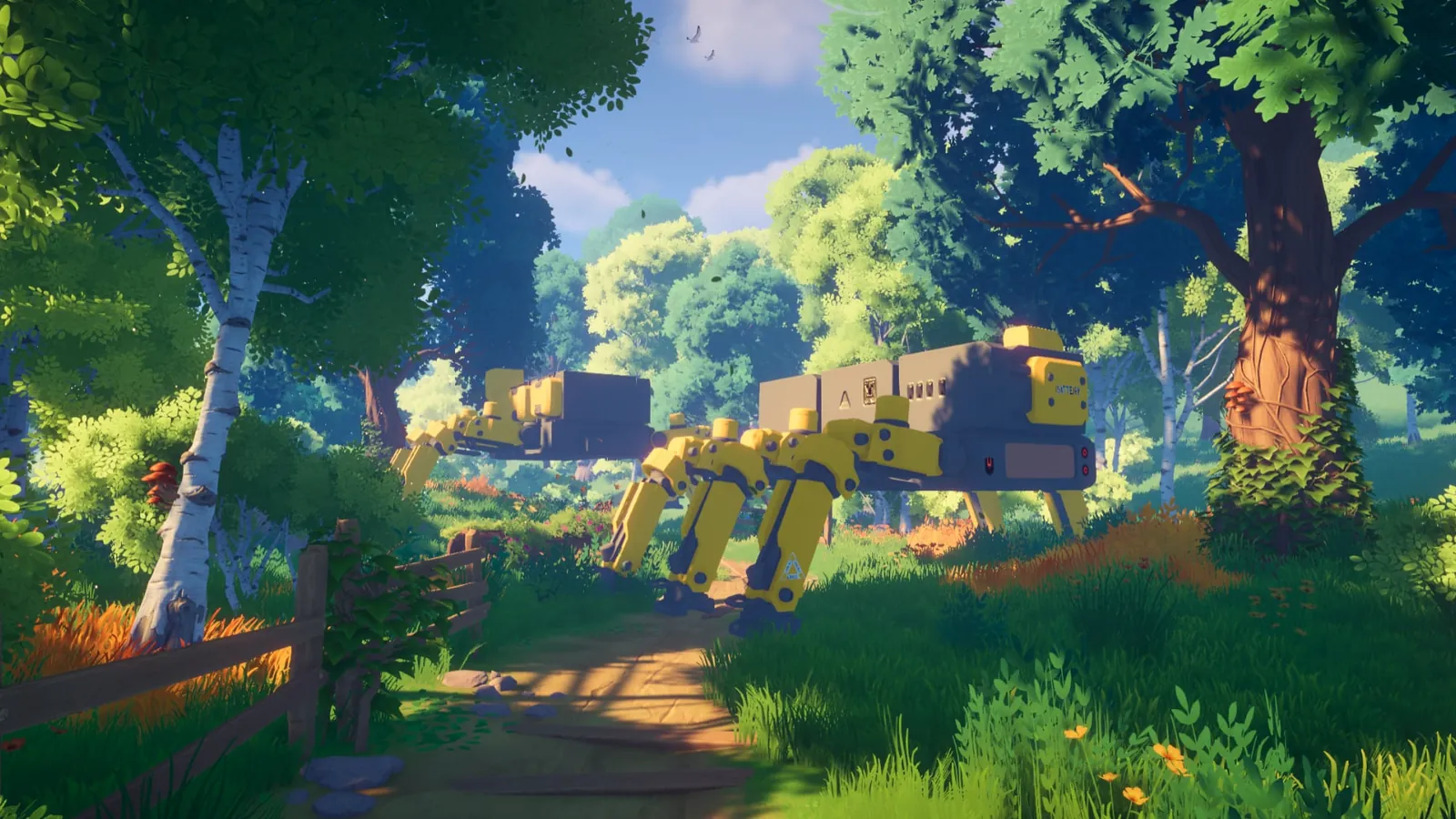
A yellow six-legged robot standing in a meadow of pink flowers, with tall purple rock spires behind it.

They work. They fight.

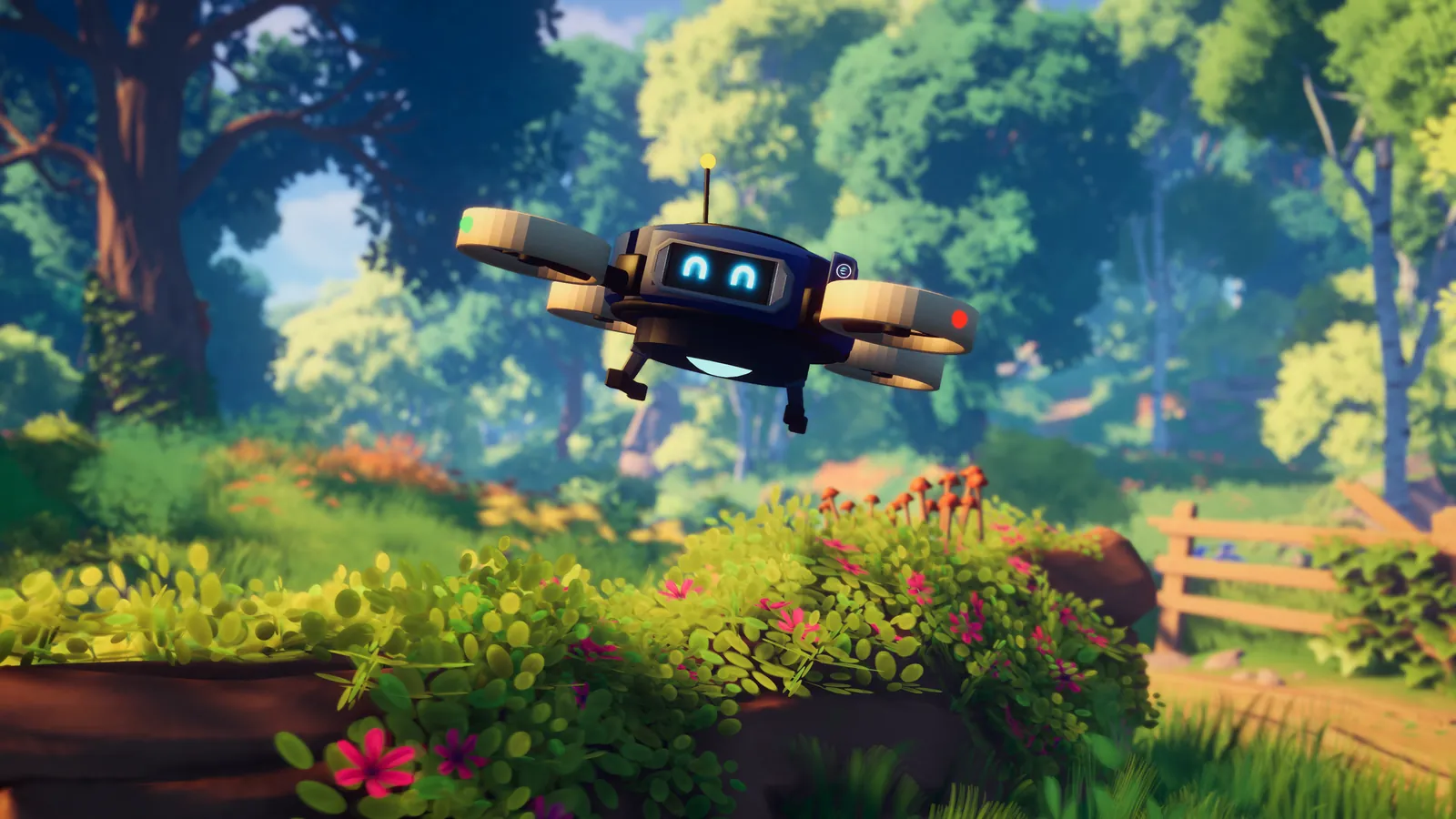
Walk up to a robot and it turns, beeps, and does a full-body wiggle before its command menu opens. Set it to autopilot and it takes the nearest job it is qualified for. Tell it to prefer mining and it only touches rock. Pin one specific site, or click a point on the map and send it walking there. They carry mining, woodcutting, building and construction levels of their own — and when something hostile comes over the ridge, you can put them on guard.

Screenshot slot — robot_escort

From hand tools to the space age

The progression is deliberately incremental. Your own shield charge to a biomass burner to solar to stored energy. Hand tools to power tools. One robot to a shift of them. Every rung exists because the one before it ran out, so you always know exactly which bottleneck you are buying your way past — and the climb runs all the way from the first rock you break to a starship.

A pale wooded ridge at night under a deep blue sky filled with stars and a bright nebula.

Scan the island

Some upgrades you level into. Others you have to go and find. Scanning the island's plants, animals and minerals earns Discovery Points, a second currency that buys branches ordinary levelling never reaches. You can climb without it. You climb faster with it.

Screenshot slot — scan_lupine

Build the world before you land

Before you land, you build the world. Pick an archetype — Archipelago, Greenhouse, Pangaea, Arid, Icebound — then drag continent count, ocean level, coast roughness, mountains, rainfall, desert belts and deposit density until the map looks like somewhere you want to live. Seven layers to read it by: biomes, heightmap, temperature, rainfall, resources and more. Then you pick a landing site, and the bearings you studied on the map are the bearings you sail by.

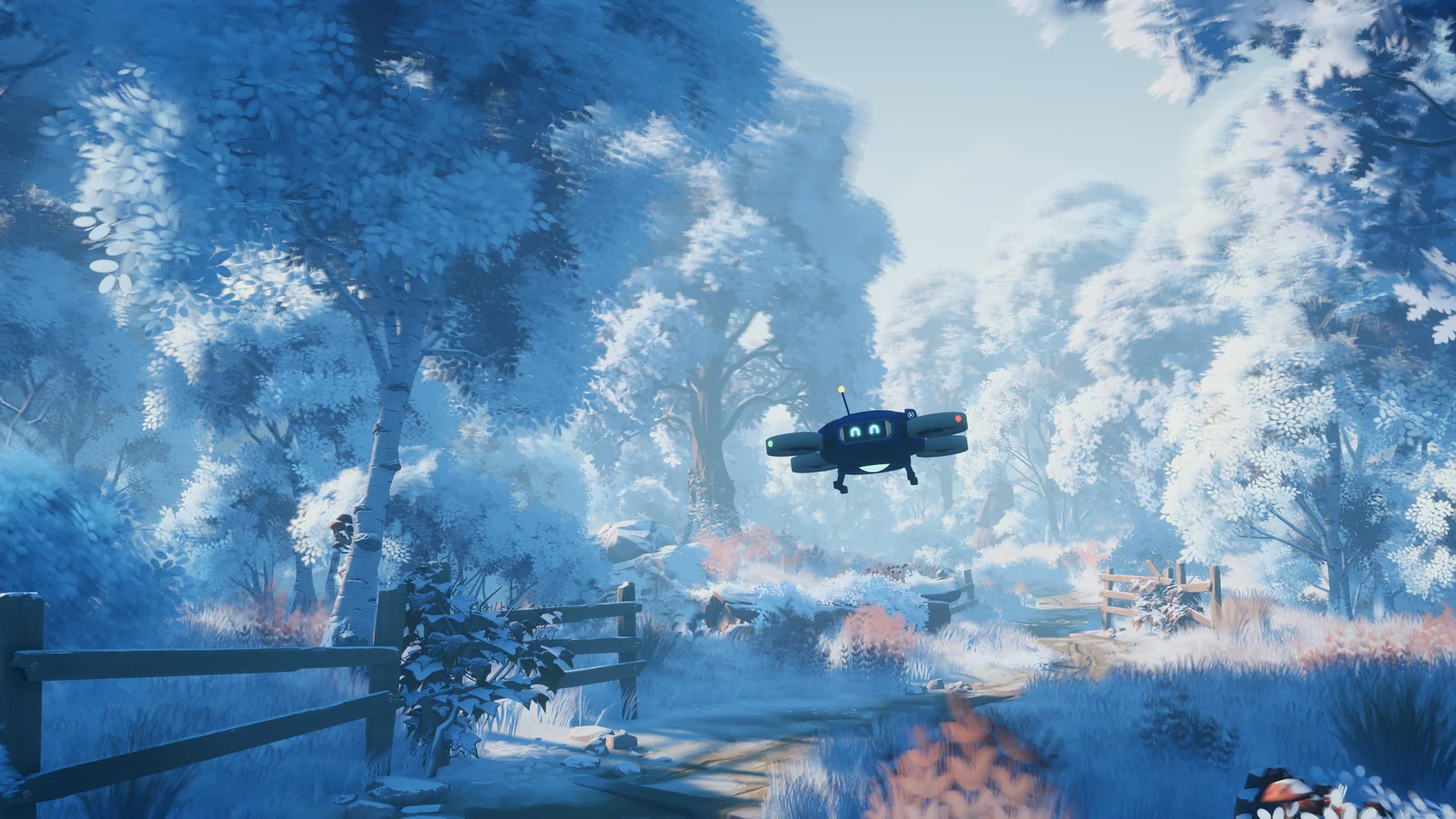
A field of rust-orange grass running to the sea, dotted with frost-white trees under a clear sky.

The Matter Lattice

One wallet. Whole colony.

Most survival games make you a courier. Ore comes out of a rock, goes in a bag, walks back to base, goes in a chest, and only then counts. Stones to Starships cuts that out.

The Matter Lattice is the shared resource wallet. Anything you or your robots recover synchronizes into it, and any linked builder or fabricator can spend from it — wherever it happens to be standing.

Resource synchronized

The Matter Lattice shares recovered materials with every linked builder and fabricator. What you gather here can be used anywhere.

Headquarters starts the field. Past that, Lattice Relays extend it: place one inside range of Headquarters or of another connected relay and it joins the mesh. Chain them and the colony’s resources — and its stored Energy, which recharges robots standing inside coverage — follow you outward. Break the chain upstream and everything downstream goes dark.

And the grid has to be earned. Every rung exists because the previous one ran out:

Your Shield Generator

Energy has to come from somewhere, and at first it comes from you. Your personal shield recharges on its own; pour that charge into a machine on the spot.

Biomass Burner

Burn what you gathered and the grid runs without you standing on it.

Solar Panel

Power that arrives on its own — and a reason to think about capacity.

Energy Storage

Surplus you can bank, so production does not stall the moment demand spikes.

Charging things off your own shield is meant to become obsolete. That is the point of putting it first.

Honest status

Where this actually is

Stones to Starships is a pre-alpha demo. There is no release date, no price, and no public build you can download — and this page will not pretend otherwise. Here is the honest split.

Playable end to end today

Create a world, land on a generated island, gather with the harvest beam, place a camp, climb the shield → burner → solar → storage power ladder, raise Headquarters, run an Assembler and a Robot Fabricator, build and name robots and give them work, scan subjects and analyze them for Discovery Points, spend those across a two-currency skill tree, fight hostile wildlife, and unlock traversal — hang glider, zipline kit, grav lift, and a rideable coastal skiff. Technology tiers cap at level 15.

In flight

The starship the title promises is concept art and design intent, not gameplay code — it is the destination, and we would rather say so than imply it is in your hands. Sailing to the other charted islands is not implemented; today you land on one island and the rest are silhouettes on the horizon. Localization is mid-pass: every string extracted so far ships in seven languages, and the extraction sweep across the remaining menus is still running.

Not promised

No release date. No price. No multiplayer — the project is single-player and co-op is explicitly out of current scope. When any of that changes, it will change here first.

Questions

Frequently asked

What kind of game is Stones to Starships?

A first-person survival and base-building game with heavy automation. You harvest raw materials by hand, build the machines and robots that take that work over, and climb an incremental upgrade ladder — charging machines off your own shield generator, then a burner, then solar, then stored power; hand tools to power tools; one robot to a shift of them — that runs from the first rock you break to the space age.

What is the Matter Lattice?

The shared colony resource wallet. Anything you or your robots collect synchronizes into it, and any linked builder or fabricator can spend from it no matter where it is standing. Headquarters projects the initial field and Lattice Relays chain it outward, so extending your reach is a building decision rather than an inventory chore.

Is the world procedurally generated?

Yes, and you generate it yourself before you play. You choose a world archetype and tune continents, ocean level, coastline roughness, mountains, rainfall, desert belts and deposit density, read the result across seven map layers, then pick where to land. It is seed-driven, so the same settings and seed give you the same world again.

Is there a demo I can play?

Not yet. The game is in pre-alpha and there is no public build to download. A Steam page is on the way — that is where a playable demo will be announced first, and wishlisting there is the single most useful thing you can do for a game at this stage.

Is there multiplayer or co-op?

No. Stones to Starships is single-player, and multiplayer is explicitly out of scope for the current work. That may be revisited after the single-player game stands up on its own, but it is not something to expect.

Is there a starship, or is that just the title?

It is the destination the title describes, and the reason the name was chosen. Right now it is concept work and design direction, not a system you can play.

What is it built in, and who is making it?

Unity 6 with the Universal Render Pipeline, by Stubborn Machine Games, a one-person independent studio.